The Hidden Architecture of a Badminton Athlete: Muscle, Tendon & Ligament
Read 7 times
When fans watch a badminton rally, they see speed, height, and power. What they don’t see is the intricate biological machinery beneath the skin — muscle, tendon, and ligament working in a coordinated relay that makes every jump smash, lunge, and net kill possible. Understanding this hidden architecture is what separates training that builds durable, high-performing athletes from training that simply builds tired ones.
The Muscles That Power Every Shot
Badminton demands an unusual mix of explosive power and repeated-effort endurance. The quadriceps and glutes drive the lunge and the jump; the calves absorb landing forces and fuel the next push-off; the shoulder and upper-back muscles generate racket head speed while decelerating the arm safely after each stroke; and the deep core muscles transfer force between the lower and upper body so that power generated in the legs actually reaches the shuttle. A weakness in any one link reduces power output everywhere else in the chain.
Tendons: The Body’s Elastic Springs
Tendons connect muscle to bone, but their role goes far beyond simple attachment. Structures like the Achilles tendon and the patellar tendon behave like elastic springs, storing energy during a landing or a lunge and releasing it explosively on the next movement. This stretch-shortening quality is what allows a well-conditioned player to move court after court without their legs feeling heavier each time. Tendons adapt more slowly than muscle, which is why sudden increases in jump or sprint volume are a common cause of tendon irritation in fast-improving juniors.
Ligaments: The Silent Stabilizers
Unlike muscles and tendons, ligaments do not contract or generate force — they hold joints together and limit unsafe ranges of motion. The ankle’s lateral ligaments, the knee’s ACL and MCL, and the shoulder’s capsular ligaments are under constant stress from badminton’s rapid direction changes, lunges, and overhead actions. Because ligaments have a limited blood supply, they heal slowly when damaged, which is why ankle sprains and knee ligament injuries can sideline a promising athlete for months.
Common Load Points in a Badminton Player’s Body
- The Achilles tendon and calf complex, from repeated split-steps and explosive push-offs.
- The knee, especially the patellar tendon, from deep lunges and jump landings.
- The shoulder rotator cuff, from the repetitive overhead loading of smashes and clears.
- The ankle’s lateral ligaments, from rapid lateral movement and net-to-baseline scrambles.
Training the Architecture, Not Just the Skill
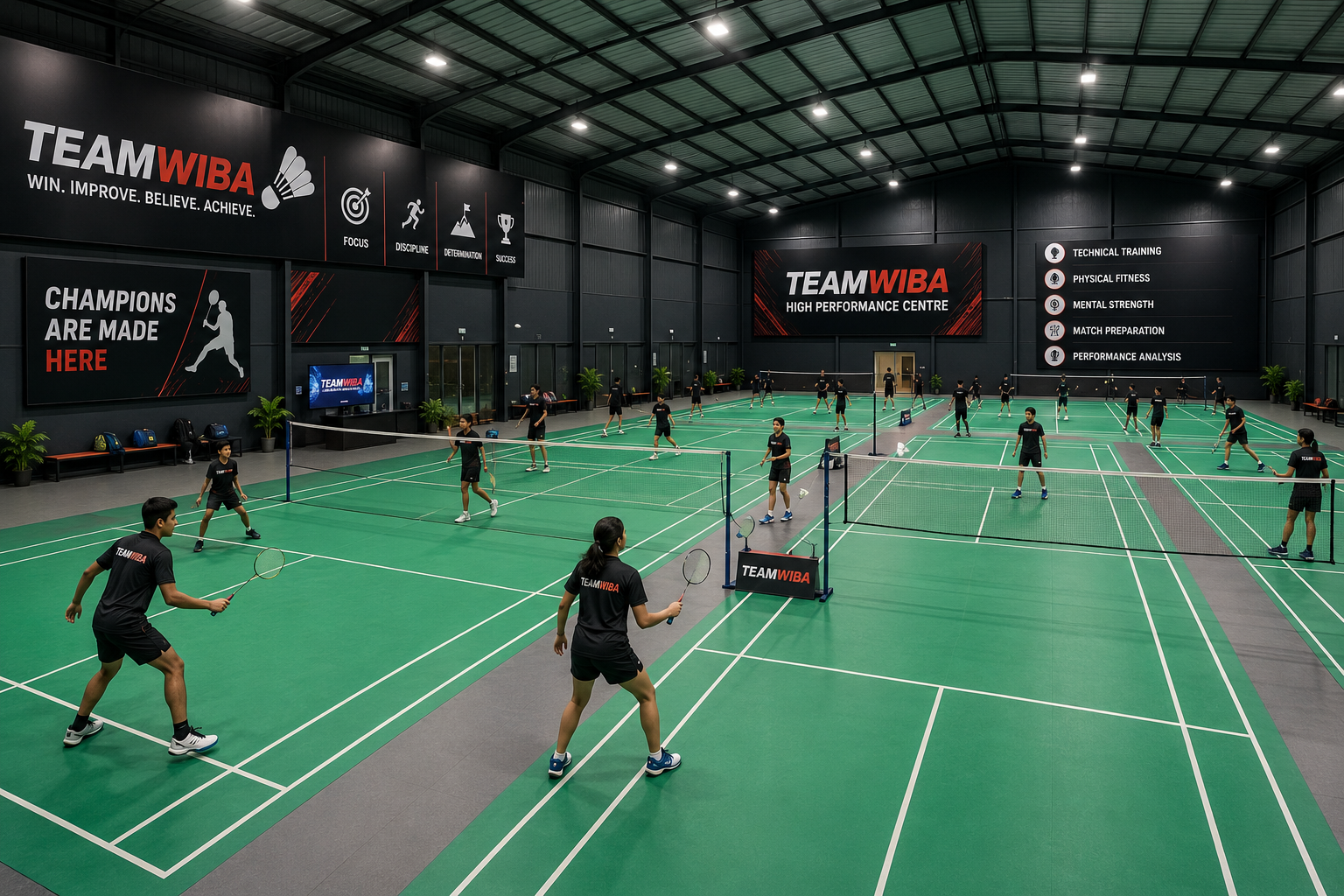
Technical drills alone do not prepare these tissues for competition. Progressive strength training conditions muscle; controlled plyometric loading conditions tendons; and balance, proprioception, and mobility work condition the ligaments and joint capsules that stabilize every movement. At TEAM WIBA, physical preparation is treated as inseparable from stroke and footwork training, because an athlete’s ceiling is ultimately set by the durability of the body carrying the skill.
Conclusion
A badminton champion is not built from talent alone but from tissue that can absorb, store, and release force session after session, year after year. Coaches, parents, and athletes who understand this hidden architecture are better equipped to build careers that last, rather than bodies that break down just as the skill is finally coming together.
Disclaimer
This article is written for general educational purposes, drawing on established principles of sports science and the coaching experience of TEAM WIBA. It is not medical advice and should not replace assessment by a qualified physiotherapist, sports physician, or strength-and-conditioning professional. Any athlete experiencing pain, swelling, instability, or reduced range of motion should seek professional evaluation before continuing training or competition.

Ditulis oleh: Coach D @ TEAM WIBA